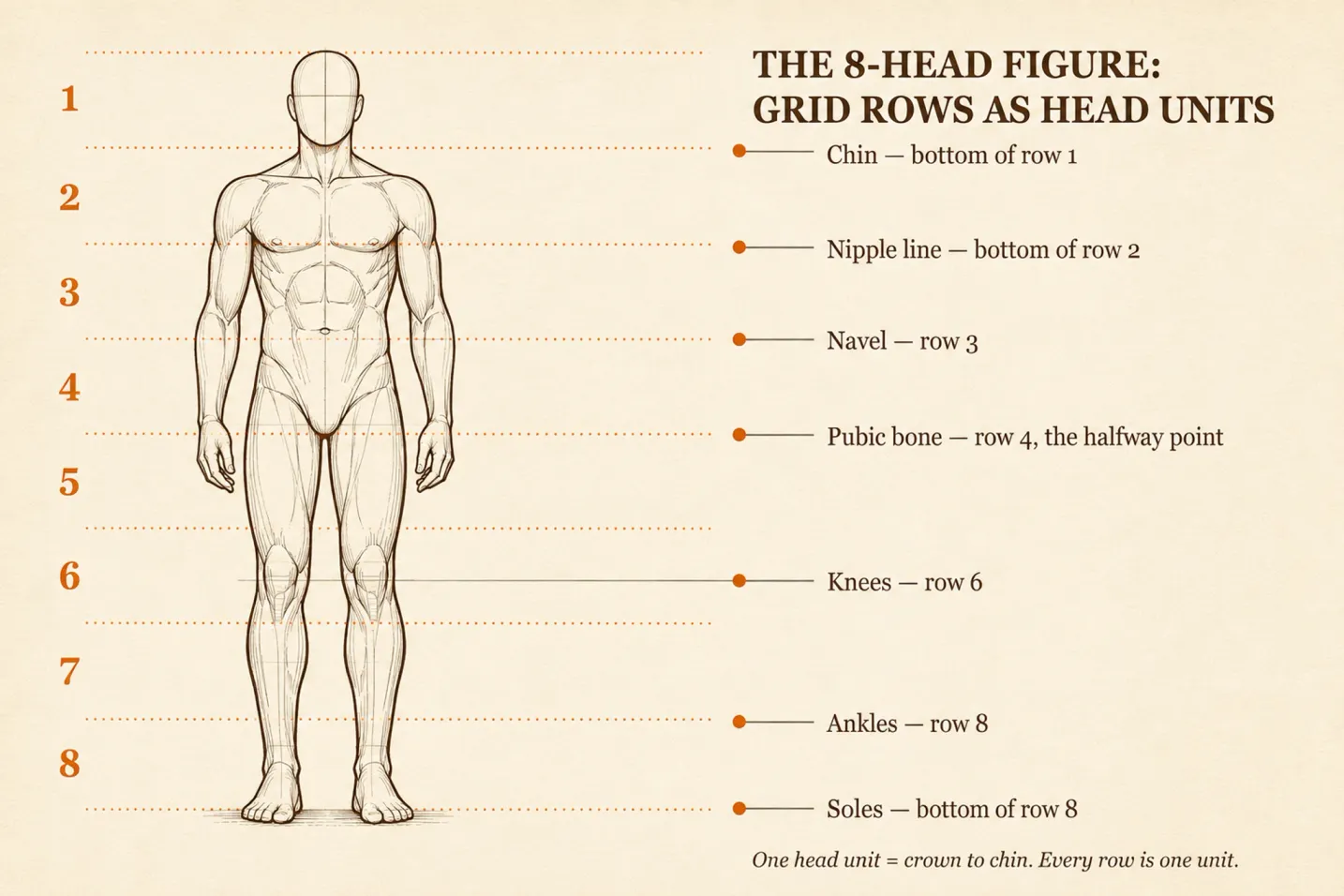

Anatomical mastery requires systematic approaches that coordinate complex human structural understanding with precise drawing execution while building observational skills that serve both technical accuracy and artistic expression. Grid methods provide essential frameworks for step-by-step anatomical learning that develops proportional sensitivity, structural comprehension, and construction abilities necessary for convincing figure work across diverse artistic applications and professional requirements.
The complexity of human anatomy becomes manageable through systematic study methods. Initial attempts at anatomical drawing often capture surface details while missing crucial underlying structures. The breakthrough comes from integrating grid techniques with anatomical study, creating a framework that builds understanding progressively. This systematic approach transforms overwhelming complexity into achievable steps, ensuring both accuracy and comprehension. For foundational grid skills essential to anatomical study, consult our complete grid drawing guide.
Anatomical mastery represents one of the most challenging yet rewarding aspects of artistic development, requiring coordination between scientific knowledge, observational skills, and artistic sensitivity that serves both technical accuracy and creative expression. The most effective anatomical approaches balance systematic construction with expressive interpretation, ensuring that technical knowledge supports rather than replaces artistic vision and individual creative development.
Fundamental Anatomical Principles and Systematic Grid Applications
If you want to keep anatomical proportions stable while you construct forms, start from a gridded reference (create one with our image grid generator).
Understanding Human Anatomical Structure
Skeletal framework and proportional foundations: Human anatomy follows predictable structural principles based on skeletal relationships that provide frameworks for systematic study and artistic representation. Understanding these foundational relationships enables grid applications that support rather than conflict with natural anatomical proportions while accommodating individual variation.
Muscular system integration and surface form development:
- Major muscle groups: Understanding how muscles attach to skeleton and influence visible surface characteristics
- Anatomical landmarks: Key reference points where skeletal structure affects surface appearance and measurement
- Movement mechanics: How pose and action affect muscle engagement and surface form modification
- Individual variation: Accommodating different body types while maintaining anatomical accuracy
- Age considerations: How proportional relationships change throughout life stages and their artistic representation
Systematic learning progression and skill development: Anatomical mastery requires progressive learning that builds complexity systematically while maintaining accuracy and understanding throughout the development process. Grid techniques support this progression by providing consistent frameworks across different learning stages. This methodical approach connects directly to figure drawing techniques where anatomical knowledge applies to complete figures.
Step-by-Step Grid Integration with Anatomical Study
The grid method provides essential structure for anatomical learning, creating measurable reference points that ensure accuracy while building understanding of human proportions.
Progressive construction methods and systematic development: Professional anatomical study employs systematic construction sequences that build understanding gradually while maintaining accuracy and developing observational skills essential for advanced artistic work.
Proportional analysis and measurement techniques: Grid methods enable precise proportional analysis that develops understanding of anatomical relationships while building observational abilities necessary for accurate figure work without grid assistance.
Verification and correction approaches:
- Anatomical accuracy checking: Systematic methods for verifying structural credibility throughout construction
- Proportional verification: Using grid relationships to ensure accurate size and positional relationships
- Construction sequence optimization: Building complexity systematically while maintaining accuracy
- Error identification: Recognizing and correcting anatomical problems before they affect overall drawing success
- Quality control: Maintaining professional standards throughout step-by-step development processes
Professional Step-by-Step Anatomical Construction Methods
Phase 1: Foundation Analysis and Grid Establishment
Reference analysis and structural identification: Effective anatomical study begins with systematic reference analysis that identifies essential structural information while establishing frameworks for systematic construction and learning development.
Grid construction for anatomical applications: Anatomical grid systems must accommodate complex three-dimensional relationships while providing systematic frameworks for two-dimensional representation and construction accuracy.
Initial proportion establishment and verification:
- Skeletal landmark identification: Locating key structural reference points for accurate proportion establishment
- Major mass relationships: Understanding how major body segments relate proportionally
- Grid coordination: Establishing grid systems that support rather than conflict with anatomical structure
- Measurement verification: Ensuring initial proportional relationships provide accurate foundations for detailed development
- Construction planning: Organizing systematic development sequences for efficient and accurate learning
Practice these principles with reference images using our free grid drawing tool to develop your anatomical accuracy.
Phase 2: Systematic Construction and Form Development
Progressive form construction and anatomical integration: Systematic anatomical construction builds complexity gradually while maintaining structural accuracy and developing understanding of anatomical relationships throughout the construction process.
Volume and dimensional development: Anatomical drawing must represent three-dimensional forms convincingly through systematic approaches to volume, depth, and spatial relationships that coordinate with grid accuracy.
Structural verification and anatomical credibility:
- Form accuracy checking: Ensuring three-dimensional representation maintains anatomical credibility
- Proportional consistency: Maintaining accurate relationships throughout construction development
- Anatomical logic: Verifying that constructed forms could function as living anatomy
- Integration quality: Ensuring individual elements combine into unified, convincing anatomical representation
- Construction efficiency: Developing systematic approaches that enable both accuracy and reasonable working speed
Phase 3: Detail Development and Artistic Integration
Surface detail coordination with structural foundations: Anatomical detail work must coordinate with underlying structural accuracy while developing artistic sensitivity and individual expression within systematic frameworks.
Light, shadow, and surface characteristic development: Anatomical representation requires understanding how light reveals form while developing artistic approaches to surface treatment that enhance rather than compromise structural accuracy.
Artistic integration and creative interpretation:
- Style coordination: Integrating systematic accuracy with individual artistic approach and creative vision
- Expression balance: Maintaining anatomical credibility while allowing artistic interpretation and creative freedom
- Technical integration: Coordinating anatomical knowledge with drawing techniques and artistic materials
- Quality synthesis: Creating anatomical work that demonstrates both technical competency and artistic sensitivity
- Professional presentation: Developing anatomical work that meets both educational and artistic standards
Advanced Anatomical Applications and Specialized Study Methods
Complex Pose Analysis and Dynamic Anatomy
Movement integration and pose-specific anatomical changes: Advanced anatomical study must address how human structure changes during movement while maintaining systematic accuracy and developing understanding of dynamic anatomical relationships.
Foreshortening and perspective challenges in anatomical work: Complex viewpoints present particular challenges for anatomical accuracy, requiring adapted grid techniques that maintain structural credibility while accommodating perspective distortion.
Action analysis and muscular engagement study:
- Dynamic pose construction: Systematic approaches to figures in movement while maintaining anatomical accuracy
- Muscle engagement patterns: Understanding how action affects visible muscle characteristics and surface form
- Weight distribution analysis: How pose affects structural relationships and anatomical appearance
- Balance and support: Anatomical logic in pose construction and figure stability
- Movement flow: Creating dynamic anatomical work that maintains structural credibility while conveying action
Specialized Anatomical Categories and Study Applications
Portrait and facial anatomy with grid integration: Facial anatomy requires specialized approaches that coordinate complex three-dimensional relationships with systematic accuracy while accommodating individual variation and expressive requirements.
Hands and feet: complex anatomical structures: Extremities present particular anatomical challenges due to structural complexity and frequent foreshortening, requiring systematic approaches that maintain accuracy while developing understanding. For detailed techniques specific to hand anatomy, consult our step-by-step hand drawing guide.
Torso construction and core anatomical understanding:
- Ribcage and skeletal core: Understanding major structural masses and their systematic representation
- Spinal relationships: How backbone structure affects surface form and figure construction
- Muscular integration: Major muscle groups and their coordination with skeletal structure
- Breathing and expansion: How respiratory function affects anatomical appearance and construction
- Gender considerations: Anatomical differences and their appropriate systematic representation
Professional Anatomical Development and Career Applications
Educational Pathways and Systematic Skill Building
Academic anatomical training and progressive instruction: Professional anatomical development requires systematic educational approaches that coordinate scientific knowledge with artistic application while building both technical competency and creative sensitivity.
Self-directed anatomical study and resource utilization: Many artists develop anatomical understanding through independent study requiring systematic approaches to resource selection, practice organization, and progress assessment.
Master class participation and advanced anatomical instruction:
- Life drawing integration: Coordinating systematic anatomical study with direct observational work
- Dissection and scientific study: Understanding anatomical structure through scientific investigation and artistic application
- Historical study: Learning from anatomical masters and traditional approaches to anatomical representation
- Contemporary methods: Integrating modern understanding with traditional anatomical approaches
- Research applications: Contributing to anatomical knowledge through artistic investigation and professional development
Professional Applications and Career Development
Medical illustration and scientific anatomical work: Specialized anatomical careers require exceptional accuracy and scientific understanding combined with artistic presentation abilities that serve educational and professional applications.
Fine art applications and anatomical mastery: Contemporary fine art careers often require sophisticated anatomical understanding that demonstrates both technical competency and individual artistic vision through systematic skill development.
Educational and instructional opportunities in anatomical teaching:
- Anatomical instruction: Sharing systematic anatomical knowledge through formal and informal educational programs
- Workshop development: Creating educational experiences that transmit anatomical understanding effectively
- Curriculum design: Contributing to educational program development and anatomical instruction standards
- Professional writing: Contributing to anatomical literature and educational resource development
- Mentorship programs: Guiding developing artists through systematic anatomical skill acquisition
Digital Integration and Contemporary Anatomical Study Methods
Technology-Enhanced Anatomical Learning
Digital anatomical resources and reference integration: Contemporary anatomical study benefits from digital resources that provide detailed structural information while supporting traditional drawing skill development and artistic sensitivity.
3D modeling and anatomical visualization applications: Digital three-dimensional anatomical models enable sophisticated analysis and understanding that enhances traditional anatomical study while maintaining essential hands-on drawing skills.
Hybrid traditional-digital anatomical workflows:
- Digital analysis supporting traditional execution: Computer-based anatomical study enhancing hand-drawing development
- Documentation integration: Recording traditional anatomical learning for analysis and improvement
- Portfolio development: Professional digital presentation of traditional anatomical work
- Educational content creation: Developing instructional materials that combine systematic knowledge with practical application
- Research documentation: Contributing to anatomical understanding through systematic study and professional presentation
Contemporary Professional Standards and Industry Applications
Industry expectations and anatomical competency requirements: Professional anatomical work must meet contemporary standards that balance traditional anatomical accuracy with current artistic and commercial expectations while maintaining scientific credibility.
Animation and entertainment industry anatomical applications: Contemporary anatomical careers increasingly serve animation, gaming, and entertainment industries requiring systematic approaches that maintain anatomical credibility while enabling stylistic interpretation.
Cross-disciplinary anatomical applications:
- Architecture and design: Anatomical understanding serving environmental design and ergonomic applications
- Sports and movement analysis: Anatomical knowledge supporting athletic and movement-related professional applications
- Therapeutic applications: Anatomical understanding serving medical and therapeutic illustration needs
- Educational technology: Developing digital anatomical resources and interactive learning applications
- International collaboration: Working across cultural boundaries while maintaining anatomical accuracy and cultural sensitivity
Problem-Solving Complex Anatomical Challenges
Technical Problem Resolution and Advanced Methods
Anatomical accuracy challenges and systematic solutions: Complex anatomical work often encounters challenges requiring systematic diagnosis and correction methods that maintain learning progression while ensuring professional quality results.
Reference material limitations and creative solutions: Anatomical study frequently involves less-than-ideal reference materials requiring systematic approaches to information extraction and interpretation while maintaining accuracy and educational value.
Integration challenges between systematic accuracy and artistic expression:
- Scientific accuracy coordination with artistic goals: Balancing anatomical credibility with creative interpretation
- Style integration: Incorporating systematic anatomical knowledge with individual artistic approaches
- Cultural sensitivity: Appropriate anatomical representation across diverse contexts and applications
- Professional ethics: Maintaining appropriate standards in anatomical representation and educational applications
- Quality control: Ensuring anatomical work meets both scientific and artistic standards throughout development
Advanced Learning Strategies and Professional Development
Accelerated anatomical learning and efficiency optimization: Professional anatomical development requires systematic approaches to learning efficiency that maximize understanding while enabling reasonable progress toward career applications.
Anatomical specialization and expertise development: Advanced anatomical careers often require specialized knowledge in particular areas requiring focused study approaches and systematic expertise development.
Collaborative anatomical work and team integration:
- Interdisciplinary collaboration: Working with medical professionals, educators, and other specialists
- Peer learning: Collaborative anatomical study methods and knowledge sharing
- International study: Understanding anatomical approaches across different cultural and educational contexts
- Professional networking: Building relationships that support anatomical career development and knowledge sharing
- Community contribution: Sharing anatomical knowledge for artistic community development and educational advancement
Career Development and Professional Anatomical Practice
Advanced Skill Building and Specialization Pathways
Master-level anatomical study and expert instruction: Professional anatomical expertise develops through specialized training that addresses unique challenges while building capabilities for commercial, educational, and artistic applications.
Research integration and scholarly anatomical work: Some anatomical artists pursue research into anatomical methods, educational approaches, and artistic applications that inform contemporary practice while contributing to professional knowledge.
International anatomical study and cultural exchange:
- Residency programs: Intensive anatomical study opportunities and cultural exchange
- Museum study: Learning from anatomical masterworks through systematic analysis and copying
- Cross-cultural learning: Understanding different anatomical traditions and their integration with systematic approaches
- Language development: Communication skills supporting international anatomical opportunities
- Cultural sensitivity: Appropriate engagement with different anatomical traditions and cultural contexts
Business Development and Professional Anatomical Practice
Practice establishment and client development in anatomical applications: Professional anatomical careers require business skills including project estimation, client communication, and systematic project management that coordinate technical excellence with commercial requirements.
Professional networking and industry relationship development: Successful anatomical careers often depend on professional relationships with educational institutions, medical facilities, and artistic organizations that support both learning and business opportunities.
Long-term career planning and anatomical expertise development:
- Skill progression: Systematic approaches to continued anatomical development throughout career phases
- Market adaptation: Understanding changing anatomical application needs while maintaining technical excellence
- Teaching integration: Developing instructional capabilities that provide additional income while serving anatomical community
- Legacy development: Creating anatomical work and knowledge that contributes to artistic tradition and educational advancement
- Mentorship opportunities: Sharing systematic anatomical knowledge with developing artists while supporting community growth
Mastering Anatomical Excellence Through Systematic Grid Integration
Mastering anatomy with the grid method through step-by-step systematic approaches represents sophisticated integration of scientific knowledge, systematic construction methods, and artistic sensitivity that serves both educational development and professional application. Through consistent application of grid techniques combined with anatomical study, artists develop both technical accuracy and the understanding necessary for convincing figure work across diverse artistic contexts and career applications.
My experience with systematic anatomical development has taught me that scientific knowledge enhances rather than constrains artistic expression by providing structural foundations that enable confident creative interpretation while ensuring technical credibility that serves both artistic goals and professional requirements. The most accomplished anatomical artists combine systematic scientific knowledge with individual artistic vision, using grid methods and anatomical understanding as tools for achieving artistic goals rather than restrictions on creative freedom.
Professional anatomical success depends on understanding how scientific knowledge, systematic construction methods, and artistic sensitivity work together to create compelling visual representations that serve both educational and artistic requirements. Through dedicated study and systematic application of grid techniques combined with anatomical understanding, artists develop the sophisticated technical abilities and scientific knowledge necessary for lifelong growth in anatomical work and related professional applications.
Mastering Systematic Anatomical Construction
Continue refining portrait accuracy through How to Use the Grid Technique to Improve Proportions in Portrait Drawing and build whole-body balance with How to Draw Perfectly Proportioned Figures Using Grids.
If facial structure is your focus, apply the same measurements using the checkpoints in How Grids Can Help You Create Accurate Graphite Portraits.