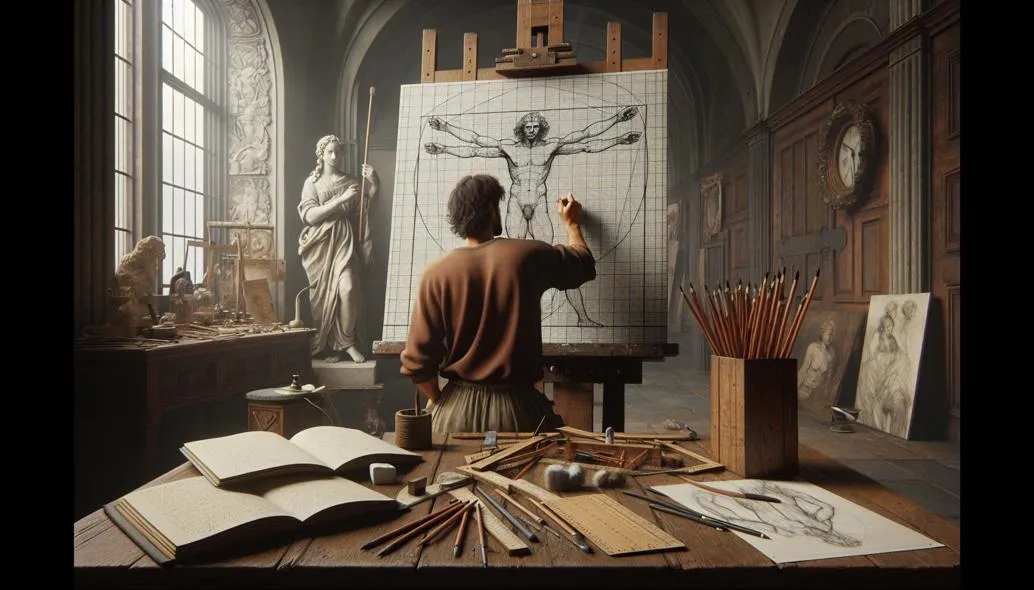
Perfect figure proportions represent the cornerstone of professional drawing skill, requiring systematic approaches that ensure anatomical accuracy while capturing the essential character of human form. Grid methods provide artists with reliable frameworks for achieving consistent proportional relationships, building technical confidence, and developing the observational skills necessary for sophisticated figure representation.
Professional figure drawing demands mastery of proportional relationships that accurately represent human anatomy while conveying artistic intent. Grid techniques provide systematic methods for achieving this precision, breaking complex three-dimensional forms into manageable two-dimensional segments that maintain accurate spatial relationships throughout the drawing process.
The challenge of figure drawing lies in translating the complex curves, volumes, and proportional relationships of the human body onto flat surfaces while preserving the essential characteristics that make each figure unique. Through systematic grid application, artists develop both technical accuracy and the visual judgment necessary for creating compelling figure representations that serve artistic, commercial, and educational purposes.
Anatomical Foundation and Proportional Systems
If you want a quick way to keep the figure proportions stable while you block in shapes, start from a gridded reference (you can make one with our grid for drawing).
Classical Proportional Standards
Understanding traditional proportional systems provides the foundation for grid-based figure drawing:
The eight-head figure system:
- Head: 1 head height from crown to chin
- Torso upper: 1 head height from chin to nipple line
- Torso middle: 1 head height from nipples to navel
- Torso lower: 1 head height from navel to crotch
- Upper leg: 2 head heights from crotch to knee
- Lower leg: 2 head heights from knee to ankle
- Total height: Approximately 8 head heights for idealized adult proportions
Anatomical landmarks for grid placement:
- Acromion process: Shoulder joint reference point
- Iliac crest: Hip bone prominence for torso measurement
- Patella: Knee cap for leg proportion division
- Malleolus: Ankle bone for foot attachment accuracy
- Manubrium: Upper chest reference for torso width
Individual Variation and Realistic Proportions
Age-related proportional changes:
- Children: Larger head-to-body ratios (4-6 heads total height)
- Adolescents: Transitional proportions with growth spurts
- Adults: Standard 7.5-8 head proportions with individual variation
- Elderly: Posture changes affecting overall proportions
- Gender differences: Hip width, shoulder breadth, limb ratios
Body type variations:
- Ectomorphic: Longer limbs, narrower torso proportions
- Mesomorphic: Balanced proportions with defined musculature
- Endomorphic: Broader torso, shorter limb proportions
- Athletic variations: Muscle development affecting proportional appearance
- Individual uniqueness: Distinctive characteristics requiring observational accuracy
Professional Grid Construction for Figure Drawing
Advanced Grid Design Principles
Proportional grid establishment:
- Primary divisions: Major body segments (head, torso, legs)
- Secondary divisions: Joint locations and anatomical landmarks
- Tertiary divisions: Detail areas requiring precision (hands, feet, facial features)
- Measurement verification: Cross-checking proportional relationships
- Reference point establishment: Key anatomical markers for accuracy
Grid scaling for different drawing purposes:
- Life-size studies: 1:1 ratio for anatomical accuracy
- Scaled drawings: Proportional reduction maintaining relationships
- Enlarged studies: Detail work requiring increased precision
- Multiple figure compositions: Consistent scaling across subjects
- Architectural integration: Figure-to-environment proportional harmony
Technical Implementation Methods
Traditional grid construction:
- Accurate measurement tools: Metal rulers, proportional dividers
- Light construction lines: Easily erasable guidelines
- Reference point marking: Key anatomical landmarks
- Systematic progression: Methodical square-by-square development
- Quality control: Regular proportional verification
Digital grid applications:
- Software overlay systems: Photoshop, Procreate, digital drawing programs
- Adjustable opacity: Reducing visual interference during drawing
- Scalable dimensions: Easy resizing for different compositions
- Layer management: Separate grid and drawing elements
- Archive capabilities: Saving successful grid configurations
Systematic Figure Construction Process
Phase 1: Structural Foundation
Initial assessment and planning:
- Reference analysis: Identifying key proportional relationships
- Pose complexity evaluation: Determining appropriate grid density
- Anatomical landmark identification: Critical measurement points
- Lighting analysis: Shadow patterns affecting form perception
- Compositional planning: Figure placement within drawing format
Basic structural establishment:
- Overall gesture capture: Primary directional lines and movement
- Major mass placement: Head, ribcage, pelvis positioning
- Limb positioning: Arms and legs in relation to torso
- Joint articulation: Anatomically correct connections
- Balance and weight distribution: Gravitational relationship establishment
Phase 2: Proportional Refinement
Detailed measurement verification:
- Head-to-body proportional checking: Accurate height relationships
- Limb length verification: Proper arm and leg proportions
- Joint placement accuracy: Anatomically correct articulation points
- Torso width relationships: Shoulder to hip proportional accuracy
- Extremity sizing: Hand and foot proportions relative to body
Anatomical accuracy development:
- Muscle group indication: Major muscular forms and attachments
- Bone structure visibility: Underlying skeletal framework
- Surface anatomy: Visible anatomical landmarks
- Proportional harmony: Consistent relationships throughout figure
- Individual characteristic capture: Unique physical attributes
Phase 3: Detail Integration and Refinement
Feature development and characterization:
- Facial feature proportions: Eye, nose, mouth relationships
- Hand and foot anatomy: Complex articulation and proportion
- Hair and clothing: Additional elements maintaining proportional logic
- Surface detail integration: Texture and form indication
- Individual character capture: Distinctive physical characteristics
Final accuracy verification and adjustment:
- Overall proportional assessment: Stepping back for total evaluation
- Anatomical logic checking: Structurally sound relationships
- Individual characteristic emphasis: Unique features and proportions
- Artistic enhancement: Creative interpretation within accurate framework
- Technical quality control: Professional standard achievement
Advanced Grid Techniques for Complex Figures
Dynamic Pose and Foreshortening Applications
Perspective integration with figure grids:
- Foreshortening accommodation: Adjusted grid proportions for perspective
- Vanishing point relationships: Figure placement within perspective systems
- Multiple viewpoint grids: Complex poses requiring varied approaches
- Anatomical perspective: Understanding form changes in space
- Environmental integration: Figures within architectural or landscape settings
Movement and gesture capture:
- Action pose analysis: Understanding weight shift and movement
- Gestural grid adaptation: Modified grid systems for dynamic poses
- Balance point identification: Center of gravity and support relationships
- Rhythmic line integration: Capturing movement flow within grid structure
- Energy and vitality preservation: Maintaining life within systematic approach
Multiple Figure Compositions
Group figure proportional consistency:
- Relative scale maintenance: Consistent proportional relationships between figures
- Perspective coordination: Multiple figures within single perspective system
- Individual character preservation: Unique proportions within group harmony
- Compositional hierarchy: Primary and secondary figure relationships
- Environmental scale integration: Figures appropriate to setting scale
Interaction and overlap management:
- Overlapping figure proportions: Maintaining accuracy through complex intersections
- Shared grid systems: Coordinated measurement across multiple subjects
- Depth relationship clarity: Foreground, middle ground, background figures
- Compositional unity: Harmonious proportional relationships throughout
- Narrative clarity: Clear figure relationships supporting story content
Specialized Applications for Different Skill Levels
Beginner-Level Implementation
Fundamental skill development:
- Simple standing poses: Basic proportional relationship learning
- Clear reference materials: High-contrast, well-defined source images
- Large grid systems: Manageable segments for initial learning
- Basic anatomical understanding: Essential proportional relationships
- Confidence building: Achievable goals leading to success
Progressive complexity introduction:
- Seated and simple action poses: Gradual complexity increase
- Basic clothing and simple backgrounds: Additional elements integration
- Proportional relationship memorization: Building visual measurement skills
- Error recognition and correction: Developing critical evaluation abilities
- Systematic working methods: Professional approach establishment
Intermediate Skill Development
Advanced proportional challenges:
- Complex poses and foreshortening: Perspective-based proportion adjustments
- Individual character development: Moving beyond generic proportions
- Clothing and drapery integration: Additional complexity while maintaining accuracy
- Environmental context: Figures within settings requiring scale consistency
- Multiple figure relationships: Group compositions with proportional harmony
Technical skill refinement:
- Reduced grid dependency: Gradual transition toward visual measurement
- Personal measurement techniques: Individual approaches to proportional assessment
- Style development: Artistic interpretation within accurate framework
- Professional quality standards: Commercial and fine art level expectations
- Portfolio development: Systematic skill demonstration
Professional-Level Applications
Commercial and fine art standards:
- Commission work requirements: Client expectations for accuracy and quality
- Animation and illustration: Industry-standard proportional consistency
- Architectural integration: Figures within designed environments
- Educational material development: Teaching aid creation requiring exemplary accuracy
- Fine art exhibition: Gallery-quality figure work with sophisticated proportional understanding
Advanced technical integration:
- Mixed media applications: Grid techniques with various drawing materials
- Digital workflow integration: Professional software and hardware utilization
- Time management: Efficient grid application for commercial deadlines
- Client communication: Technical explanation of proportional choices
- Teaching and mentorship: Sharing advanced grid techniques with developing artists
Problem-Solving and Troubleshooting
Common Proportional Errors and Corrections
Typical beginner mistakes:
- Head too large: Overemphasis on facial features affecting overall proportions
- Limbs too short: Inadequate measurement of arm and leg lengths
- Torso distortion: Incorrect ribcage and pelvis relationships
- Joint misplacement: Anatomically incorrect articulation points
- Scale inconsistencies: Varying proportional standards within single drawing
Professional correction methods:
- Systematic measurement verification: Double-checking all proportional relationships
- Anatomical reference consultation: Comparing with accurate source materials
- Grid reconstruction: Rebuilding faulty measurement systems
- Progressive correction: Addressing errors systematically rather than randomly
- Quality control implementation: Regular assessment preventing error accumulation
Advanced Challenge Resolution
Complex pose difficulties:
- Foreshortening accuracy: Perspective-based proportional adjustments
- Multiple viewpoint integration: Consistent proportions across view changes
- Dynamic balance representation: Accurate weight distribution in action poses
- Anatomical logic maintenance: Structurally sound figure construction
- Artistic enhancement: Creative interpretation without sacrificing accuracy
Professional troubleshooting approaches:
- Reference photography: Custom photo shoots for specific proportional challenges
- Anatomical study integration: Medical and artistic anatomy resources
- Master work analysis: Learning from historical and contemporary examples
- Peer review and critique: Professional feedback for accuracy verification
- Continuous education: Ongoing anatomy and figure drawing study
Digital Integration and Contemporary Methods
Software-Based Grid Applications
Professional digital tools:
- Adobe Photoshop: Advanced grid overlay and measurement tools
- Procreate: Intuitive grid systems for tablet-based drawing
- Clip Studio Paint: Specialized figure drawing grid templates
- Corel Painter: Traditional media simulation with digital grid precision
- ArtRage: Natural media effects with systematic proportional control
Digital workflow advantages:
- Perfect measurement accuracy: Eliminating human measurement error
- Infinite adjustment capability: Easy modification and experimentation
- Layer-based organization: Separate grid and drawing elements
- Reference integration: Direct photo reference with overlay grids
- Archive and documentation: Process recording for analysis and improvement
Traditional versus Digital Integration
Hybrid approach benefits:
- Digital planning with traditional execution: Best of both methods
- Reference preparation digitally: Traditional drawing from digital grids
- Digital verification: Checking traditional work with digital measurement
- Process documentation: Recording traditional techniques digitally
- Teaching applications: Digital presentation of traditional methods
Professional workflow optimization:
- Client presentation: Digital mockups with traditional final execution
- Time management: Digital speed for commercial efficiency
- Quality consistency: Digital precision with traditional expression
- Portfolio development: Combined digital and traditional demonstrations
- Educational material: Digital tools supporting traditional instruction
Career Applications and Professional Development
Industry Applications
Commercial art requirements:
- Animation industry: Consistent character proportions across frames
- Illustration work: Accurate figure representation for publishing
- Concept art: Character design with proportional consistency
- Architectural visualization: Human figures in environmental context
- Fashion illustration: Proportional accuracy with stylistic interpretation
Fine art applications:
- Portrait commissions: Accurate likeness with artistic interpretation
- Figure study exhibitions: Academic-level proportional demonstration
- Mixed media works: Figure integration with various artistic approaches
- Public art projects: Large-scale figure work requiring systematic accuracy
- Educational demonstrations: Teaching proportional principles through example
Professional Skill Development
Portfolio elements for career advancement:
- Process documentation: Showing systematic approach to proportional accuracy
- Skill progression demonstration: Before and after examples showing growth
- Versatility examples: Various poses, ages, and body types with consistent accuracy
- Problem-solving documentation: Challenging proportional solutions
- Teaching materials: Clear explanation of grid techniques for instruction
Continuing education and improvement:
- Anatomy workshops: Advanced understanding of underlying structure
- Life drawing sessions: Regular practice with live models
- Master class participation: Learning from established professionals
- Contemporary technique study: Staying current with evolving methods
- Personal project development: Challenging self with complex proportional goals
Mastering Proportional Excellence
Drawing perfectly proportioned figures using grids represents a sophisticated integration of anatomical knowledge, systematic methodology, and artistic sensitivity. Through consistent application of grid techniques, artists develop both technical accuracy and the visual judgment necessary for creating compelling figure representations that serve various artistic and commercial purposes.
The journey toward proportional mastery requires patience, systematic practice, and deep understanding of human anatomy combined with effective measurement techniques. Grid methods provide reliable frameworks that enable artists to achieve consistent accuracy while developing the observational skills necessary for eventual independence from mechanical aids.
Professional figure drawing skills enable artists to work confidently across various media and applications, from intimate portrait studies to large-scale commercial projects. Through dedicated study and systematic application of grid techniques, artists develop the sophisticated proportional awareness and technical proficiency necessary for lifelong artistic growth and professional success.
Mastering Figure Proportions with Grids
For portrait-specific measurements, review How Grids Can Help You Create Accurate Graphite Portraits and for anatomical structure drills revisit Mastering Anatomy with the Grid Method.
Ready to Try the Grid Method?
Put these techniques into practice with our free grid generator tool—trusted by 170,000+ artists worldwide.
Create Your Grid Now →