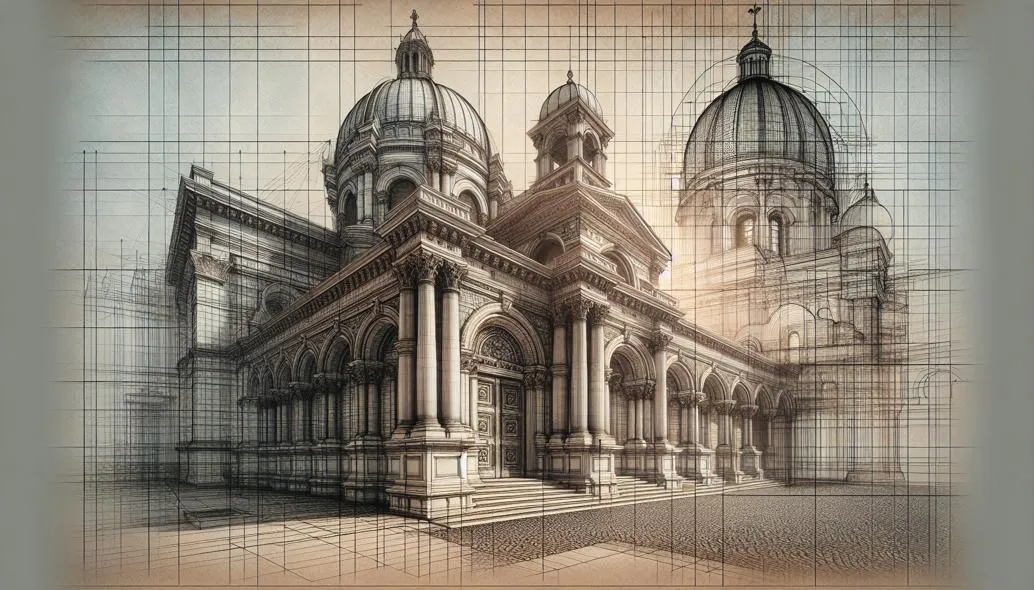
Architectural sketching demands exceptional precision in representing three-dimensional structures, spatial relationships, and environmental contexts through systematic approaches that coordinate perspective accuracy with proportional consistency. Grid techniques provide essential frameworks for managing complex building geometry, coordinating multiple vanishing points, and maintaining structural integrity throughout the design communication process that serves both conceptual development and professional presentation.
My first architectural sketching assignment during design school resulted in a building that appeared to defy structural logic, with walls that seemed to bend impossibly and windows that floated independently of their supporting framework. Despite careful observation of the subject building, my freehand approach created perspective inconsistencies that made the structure appear unstable and unconvincing. Learning to integrate systematic grid techniques into architectural drawing transformed my ability to represent buildings accurately while maintaining the expressive qualities essential for design communication.
Architectural sketching requires unique systematic approaches that coordinate three-dimensional building geometry with two-dimensional representation challenges, demanding understanding of structural principles, perspective systems, and environmental contexts. The most effective architectural sketching balances technical accuracy with expressive communication, ensuring that drawings serve both analytical and presentation purposes throughout the design process.
Understanding Architectural Drawing Challenges and Grid Solutions
If you want architecture sketches to stay structurally correct, a grid gives you repeatable checkpoints for alignment and spacing. You can add a grid with our grid drawing tool.
Structural Accuracy and Building Logic
Three-dimensional coordination in two-dimensional representation: Architectural subjects present complex three-dimensional relationships that must be accurately represented through two-dimensional drawing techniques. Grid systems provide frameworks for coordinating these spatial relationships systematically, ensuring that building elements maintain convincing structural logic and proportional consistency.
Perspective complexity in architectural contexts:
- Multiple vanishing points: Buildings often require two-point or three-point perspective systems
- Structural alignment: Ensuring vertical elements remain plumb and horizontal elements maintain appropriate angles
- Scale transitions: Managing foreground, middle-ground, and background architectural elements
- Environmental integration: Coordinating buildings with landscape and urban contexts
- Detail hierarchy: Appropriate level of detail for different viewing distances and sketch purposes
Material representation and surface articulation: Architectural sketching must communicate material qualities, surface textures, and construction details that convey both aesthetic character and technical information. Grid systems help organize these surface treatments systematically while maintaining overall structural accuracy.
Design Communication and Professional Applications
Conceptual development through systematic sketching: Architectural design benefits from sketching approaches that support both creative exploration and technical analysis. Grid techniques enable systematic investigation of proportional relationships, spatial organizations, and design alternatives while maintaining accuracy standards necessary for design development.
Client communication and presentation quality: Professional architectural practice requires sketching capabilities that communicate design concepts clearly to clients, consultants, and construction teams. Systematic grid approaches ensure presentation quality while enabling efficient production under project timeline constraints.
Documentation and construction coordination:
- Field sketching: Systematic approaches to recording existing conditions and construction progress
- Design development: Sketching methods supporting iterative design refinement and technical coordination
- Construction documentation: Clear communication of design intent and technical requirements
- Problem-solving visualization: Rapid but accurate sketching for addressing construction challenges
- Team collaboration: Systematic approaches enabling clear communication between design team members
Professional Grid Systems for Architectural Representation
Perspective Grid Construction for Buildings
Single-point perspective applications and urban contexts: Urban architectural sketching often employs single-point perspective for street views and interior spaces. Grid construction for single-point perspective requires understanding horizon line placement, vanishing point location, and systematic coordination of receding elements to achieve convincing spatial depth.
Two-point perspective mastery for building exteriors: Most architectural exterior sketching employs two-point perspective to show both front and side building faces simultaneously. Grid systems for two-point perspective coordinate multiple vanishing points while maintaining vertical alignment and proportional accuracy across complex building forms.
Three-point perspective for dramatic architectural views:
- Worm's-eye views: Low viewpoints emphasizing building height and structural drama
- Bird's-eye perspectives: Elevated viewpoints showing building context and urban relationships
- Extreme angle management: Systematic approaches to maintaining accuracy in dramatic perspective conditions
- Vanishing point coordination: Complex grid systems managing three simultaneous perspective recession directions
- Proportional control: Maintaining convincing building proportions despite extreme perspective distortion
Specialized Architectural Grid Applications
Building proportion and modular coordination: Architectural design employs modular systems and proportional relationships that can be systematically represented through appropriate grid construction. Understanding architectural proportional systems enables grid approaches that support rather than conflict with building design logic.
Structural system representation: Different building structural systems—post-and-beam, masonry, steel frame, concrete—require adapted grid approaches that emphasize appropriate structural characteristics while maintaining overall architectural accuracy and communication clarity.
Environmental and site integration:
- Landscape coordination: Grid systems that integrate building representation with site context
- Urban context: Systematic approaches to showing buildings within street and neighborhood environments
- Natural lighting: Grid frameworks supporting accurate shadow representation and environmental lighting effects
- Seasonal considerations: Adapting grid approaches for different environmental conditions and landscape characteristics
- Infrastructure integration: Coordinating building representation with roads, utilities, and urban infrastructure elements
Advanced Architectural Sketching Techniques with Grid Integration
Complex Building Forms and Contemporary Architecture
Curved and non-orthogonal building geometry: Contemporary architecture increasingly employs curved surfaces, angled walls, and complex geometric forms that challenge traditional grid approaches. Advanced grid techniques enable systematic representation of these complex forms while maintaining structural logic and proportional accuracy.
Multi-building compositions and urban design: Architectural sketching often requires representing multiple buildings within single compositions, demanding grid systems that coordinate diverse building types, scales, and orientations while maintaining overall compositional unity and environmental accuracy.
Detail integration and construction communication:
- Connection details: Grid systems supporting accurate representation of building joint and connection conditions
- Material transitions: Systematic approaches to showing how different building materials meet and interact
- Construction sequences: Sketching methods that communicate building assembly and construction logic
- Weathering and aging: Representing how buildings change over time through environmental exposure
- Maintenance considerations: Sketching approaches that communicate ongoing building care and preservation requirements
Professional Practice Applications
Design development and iterative refinement: Architectural design involves continuous refinement through multiple sketch iterations. Grid techniques enable systematic comparison of design alternatives while maintaining accuracy standards necessary for informed design decision-making and client communication.
Regulatory and code compliance visualization: Architectural practice must address building codes, zoning requirements, and accessibility standards that can be systematically represented through grid-based sketching approaches that demonstrate compliance while maintaining design quality.
Construction administration and field documentation:
- Progress documentation: Systematic sketching approaches for recording construction development and identifying potential problems
- Change order visualization: Clear communication of design modifications and their construction implications
- Quality control: Sketching methods for documenting construction quality and identifying areas requiring attention
- Coordination communication: Clear visual communication between architects, engineers, and construction teams
- Client updates: Professional presentation of construction progress and design implementation
Specialized Building Types and Grid Adaptations
Residential Architecture and Human Scale
Single-family residential sketching approaches: Residential architecture requires grid approaches that emphasize human scale, domestic proportions, and neighborhood context integration. Understanding residential proportional systems enables sketching that communicates both architectural character and livability considerations.
Multi-family and urban residential applications: Urban residential architecture presents unique challenges including repetitive elements, varying unit types, and complex site relationships that require systematic grid approaches adapted for efficient representation and clear design communication.
Historic residential preservation and documentation:
- Period style accuracy: Grid approaches adapted for different architectural periods and regional traditions
- Renovation visualization: Systematic methods for showing existing conditions and proposed modifications
- Preservation planning: Sketching approaches supporting historic preservation analysis and planning
- Cultural sensitivity: Appropriate representation of culturally significant residential architecture
- Community context: Integration of individual buildings within neighborhood and cultural landscapes
Commercial and Institutional Architecture
Office building and commercial architecture representation: Commercial architecture requires grid approaches that emphasize structural efficiency, functional organization, and urban integration. Understanding commercial building systems enables sketching that communicates both architectural design and operational requirements.
Institutional building complexity and civic architecture: Institutional buildings—schools, hospitals, government facilities—often employ complex programmatic organizations that require systematic grid approaches capable of representing both architectural character and functional relationships.
Industrial architecture and infrastructure integration:
- Manufacturing facility representation: Grid approaches adapted for industrial building scales and functional requirements
- Infrastructure coordination: Systematic representation of buildings within larger industrial and transportation systems
- Environmental considerations: Sketching methods addressing industrial architecture's environmental impacts and site relationships
- Safety and regulatory compliance: Visual communication of safety requirements and regulatory compliance measures
- Economic considerations: Representation of building efficiency and operational cost implications
Digital Integration and Contemporary Architectural Sketching
Technology-Enhanced Grid Construction
CAD integration and hybrid workflows: Contemporary architectural practice increasingly combines digital design tools with traditional sketching methods. Understanding how to integrate grid techniques with CAD workflows enables efficient design development that maintains both technical accuracy and creative expression.
Digital perspective construction and accuracy verification: Digital tools enable sophisticated perspective construction and grid verification that can enhance traditional sketching accuracy while maintaining the expressive qualities essential for design communication and creative development.
Virtual reality and immersive design visualization:
- 3D modeling integration: Using three-dimensional digital models to inform systematic two-dimensional sketching approaches
- Environmental simulation: Incorporating lighting, weather, and seasonal variations into architectural sketching
- Client engagement: Enhanced presentation techniques combining systematic sketching with digital visualization
- Design iteration: Rapid exploration of design alternatives through combined digital and sketching workflows
- Construction coordination: Digital tools supporting field sketching and construction documentation accuracy
Professional Practice Integration
Project delivery and timeline management: Professional architectural practice operates under strict project timelines that require efficient sketching methods capable of producing presentation-quality work within commercial constraints while maintaining technical accuracy and design quality.
Team collaboration and communication standards: Large architectural projects require coordinated team efforts that depend on standardized sketching approaches enabling clear communication between diverse team members and consultant disciplines.
Client relationships and design presentation:
- Design development presentation: Systematic sketching approaches supporting client communication throughout design development phases
- Public engagement: Community presentation techniques using accessible sketching methods for public design review processes
- Regulatory approval: Professional presentation standards for planning commission and building department reviews
- Marketing and business development: High-quality sketching supporting practice marketing and project promotion
- Award submissions: Competition-quality sketching demonstrating design excellence and technical competency
Problem-Solving Complex Architectural Challenges
Site-Specific Design Challenges
Difficult site conditions and environmental constraints: Many architectural projects involve challenging site conditions—steep slopes, urban infill, historic contexts—that require adapted grid approaches capable of representing complex site relationships while maintaining building design clarity.
Zoning and regulatory constraint visualization: Architectural design must respond to complex zoning requirements, setback restrictions, and height limitations that can be systematically represented through grid techniques that demonstrate compliance while maintaining design quality.
Infrastructure and utility coordination:
- Site utility integration: Systematic representation of building relationships with water, sewer, electrical, and telecommunications infrastructure
- Transportation access: Clear representation of vehicular and pedestrian access requirements and their design implications
- Emergency access: Visual communication of fire department access and emergency egress requirements
- Sustainability systems: Integration of renewable energy, stormwater management, and other sustainable building systems
- Future expansion: Design flexibility and expansion potential representation through systematic sketching approaches
Construction and Technical Challenges
Complex structural systems and engineering coordination: Contemporary architecture often employs sophisticated structural systems that require coordinated representation with architectural design elements. Grid techniques help coordinate structural and architectural elements while maintaining overall design clarity.
Material selection and construction detailing: Professional architectural practice requires detailed understanding of building materials and construction methods that can be communicated through systematic sketching approaches adapted for technical accuracy and construction coordination.
Cost control and value engineering visualization:
- Budget constraint representation: Sketching approaches that communicate design alternatives within budget limitations
- Phased construction visualization: Clear representation of construction sequencing and phased occupancy requirements
- Value engineering communication: Visual presentation of design modifications for cost control without compromising design quality
- Life-cycle cost considerations: Long-term building performance and maintenance visualization through systematic sketching
- Financing and development coordination: Presentation techniques supporting project financing and development approval processes
Career Development in Architectural Sketching
Educational Development and Skill Building
Academic training and portfolio development: Architectural education requires sophisticated sketching capabilities that demonstrate both technical competency and design creativity. Understanding how to develop systematic sketching skills supports academic success and professional preparation.
Professional examination and licensure preparation: Architectural licensure examinations require sketching capabilities under time pressure that demonstrate technical accuracy and design competency. Systematic grid approaches support examination success while building professional practice capabilities.
Continuing education and skill maintenance:
- Professional development workshops: Advanced techniques for experienced practitioners seeking skill enhancement
- Technology integration training: Learning to combine traditional sketching with contemporary digital tools and workflows
- Specialty practice development: Advanced sketching techniques for specialized practice areas like historic preservation or sustainable design
- International practice: Cultural adaptation of sketching approaches for practice in different cultural and regulatory contexts
- Teaching and mentorship: Developing instructional capabilities for sharing systematic sketching knowledge with students and junior practitioners
Professional Practice Applications
Practice specialization and market positioning: Different architectural practice specializations—residential, commercial, institutional, industrial—require adapted sketching approaches that demonstrate appropriate expertise while maintaining professional quality standards.
Business development and client relationship management: Professional architectural practice depends on effective client communication that often employs sketching for design explanation, alternative exploration, and decision-making support throughout project development phases.
Professional recognition and career advancement:
- Competition submissions: High-quality sketching supporting design competition entries and professional recognition
- Publication opportunities: Professional documentation of project development and design methodology through systematic sketching
- Speaking and presentation: Educational presentations sharing systematic sketching knowledge with professional audiences
- Professional organization participation: Contributing to professional development through sketching instruction and standards development
- International collaboration: Cross-cultural professional relationships supported by clear visual communication through systematic sketching approaches
Mastering Architectural Sketching Excellence
How grids can enhance your architectural sketches represents sophisticated integration of three-dimensional understanding, perspective systems, and structural knowledge that serves both design development and professional communication. Through consistent application of systematic grid techniques combined with understanding of architectural principles, practitioners develop both technical accuracy and expressive capabilities necessary for effective architectural design and communication.
My experience with systematic architectural sketching has taught me that grid techniques enhance rather than constrain creative expression by providing accuracy frameworks that enable confident design exploration while ensuring technical competency. The most effective architectural sketching balances systematic construction with creative interpretation, using grid methods as tools for achieving design goals rather than restrictions on creative freedom.
Professional architectural sketching success depends on understanding how systematic methods, three-dimensional thinking, and design communication work together to create effective visual tools that serve both creative development and professional practice requirements. Through dedicated study and systematic application of grid techniques, architects develop the sophisticated visual communication abilities and technical competency necessary for lifelong growth in architectural design and related professional applications.
Mastering Architectural Grid Sketching
For further study, explore architecture grid method and grid perspective guide.
Ready to Try the Grid Method?
Put these techniques into practice with our free grid generator tool—trusted by 170,000+ artists worldwide.
Create Your Grid Now →