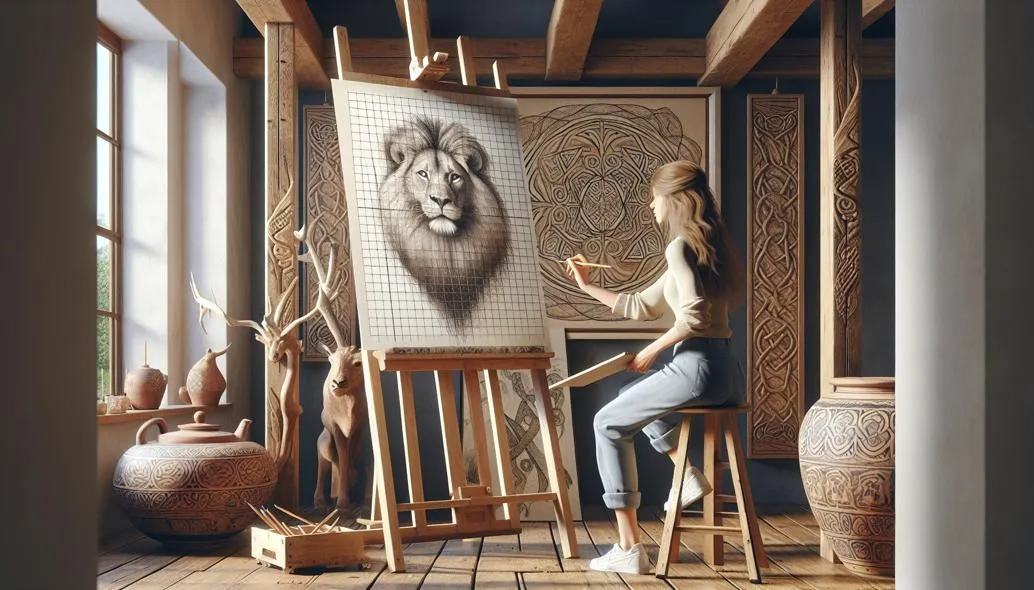
The grid method transforms the complex challenge of animal drawing into a systematic process. By understanding animal anatomy and applying strategic grid techniques, artists achieve remarkable realism in capturing creatures from domestic pets to wildlife.
Understanding Animal Anatomy Through Grid Systems
Animal drawing presents unique challenges distinct from other subjects. The diversity of species, complexity of fur and feather textures, and dynamic nature of living creatures demand specialized approaches. The grid method provides structure for managing these complexities while maintaining the spontaneity essential to capturing animal character.
Successful animal artists combine anatomical knowledge with observational skills. The grid serves as a framework supporting both technical accuracy and artistic expression. This systematic approach proves particularly valuable when working from photographic references, helping artists translate three-dimensional forms onto two-dimensional surfaces.
Fundamental Anatomical Considerations
If you’re drawing animals, a grid helps you place big anatomy landmarks (skull, ribcage, hips, joints) before you add fur and texture. You can add a grid with our grid drawing tool.
Skeletal Structure Awareness
Understanding underlying skeletal structure enhances grid-based animal drawing:
Mammals: Share similar bone structures with variations in proportion
- Spine flexibility varies by species (cats vs. horses)
- Limb proportions indicate movement patterns
- Joint locations determine natural poses
Birds: Lightweight skeletons with unique adaptations
- Wing bone structure mirrors modified arms
- Hollow bones affect volume perception
- Tail structures vary dramatically by species
Reptiles: Diverse skeletal arrangements
- Flexible spines in snakes require special grid considerations
- Shell structures in turtles create unique proportion challenges
- Limb positions vary from sprawling to upright
Strategic Grid Selection for Animal Subjects
Grid Density Based on Subject Complexity
Simple Poses (6x8 grid):
- Resting animals in profile
- Basic portrait studies
- Quick gesture captures
- Beginning exercises
Standard Complexity (10x12 grid):
- Three-quarter views
- Moderate detail subjects
- Single animal studies
- Most commission work
High Detail (16x20 or finer):
- Complex fur patterns
- Multiple animals
- Action poses
- Scientific illustration
Professional Grid Setup for Animal Drawing
Reference Selection Criteria
Quality reference material proves crucial for animal subjects:
Photographic Requirements:
- Sharp focus throughout subject
- Natural lighting revealing form
- Multiple angles for understanding structure
- High resolution capturing texture details
- Ethical sourcing (wildlife photography ethics)
Pose Considerations:
- Static poses for beginners
- Natural positions reflecting species behavior
- Clear visibility of key anatomical features
- Avoid extreme foreshortening initially
Grid Application Methods
Traditional Grid Construction:
- Analyze reference for optimal grid placement
- Position grid to align with major anatomical landmarks
- Ensure grid intersections fall at structural points
- Adjust density based on texture complexity
- Number grid coordinates for systematic work
Digital Grid Advantages:
- Adjustable opacity for varying visibility
- Easy modification of grid density
- Ability to toggle on/off during work
- Precise measurement tools
- Multiple grid overlays for complex subjects
Capturing Animal Proportions Accurately
Species-Specific Proportion Guidelines
Canines:
- Head typically 1/7 to 1/8 of body length
- Leg length equals body depth in most breeds
- Tail length varies dramatically by breed
- Ear position and size breed-specific
Felines:
- More elongated proportions than commonly perceived
- Leg length often equals body height
- Head smaller relative to body than dogs
- Flexible spine creates varying proportions
Equines:
- Body forms square from shoulder to rump
- Legs comprise half total height
- Head length equals neck length
- Specific proportions vary by breed
Understanding Foreshortening in Animals
Animal poses frequently involve complex foreshortening:
- Reclining positions compress body length
- Head angles affect feature proportions
- Limbs appear shortened from various viewpoints
- Grid quantifies these distortions accurately
Texture Rendering Techniques for Different Animals
Fur Texture Strategies
Short Fur (Dogs, Cats, Horses):
- Work in layers following growth direction
- Vary pencil pressure for depth illusion
- Leave strategic highlights for shine
- Group fur into masses before detailing
Long Fur (Collies, Persians, Yaks):
- Establish major fur flow patterns first
- Use directional strokes following contours
- Create depth through value contrast
- Suggest rather than render every strand
Technique Progression:
- Block in base values ignoring texture
- Add directional strokes for fur flow
- Develop contrast between light and shadow
- Refine with individual hair suggestions
- Enhance highlights and deep shadows
Feather Rendering Methods
Contour Feathers:
- Smooth, overlapping surfaces
- Subtle value gradations
- Sharp edges where feathers overlap
- Direction changes at body contours
Flight Feathers:
- Individual barb structure visible
- Strong central shaft
- Graduated values across vanes
- Precise edge definition
Scale and Skin Textures
Reptilian Scales:
- Regular patterns following body contours
- Each scale catches light individually
- Grid helps maintain pattern consistency
- Value variation creates dimensional effect
Smooth Skin (Amphibians, Marine Mammals):
- Subtle surface variations
- Wet surface reflections
- Gradual value transitions
- Environmental reflection considerations
Movement and Dynamic Poses
Capturing Action Through Grid Analysis
The grid method excels at capturing movement by:
Gesture Establishment:
- Map movement line through grid
- Identify compression and extension areas
- Note how proportions change with motion
- Plan where motion blur might occur
Anatomical Accuracy in Motion:
- Muscle groups activate differently
- Weight distribution shifts
- Extremities follow through
- Grid helps track these changes
Common Animal Movements:
- Running: Extended vs. compressed phases
- Jumping: Coiled preparation and full extension
- Swimming: Serpentine body movements
- Flying: Wing positions through stroke cycle
Professional Refinement Techniques
Strategic Development Process
Phase 1: Structure (Grid visible)
- Establish accurate proportions
- Map major anatomical features
- Define gesture and movement
- Light construction throughout
Phase 2: Form (Grid fading)
- Develop three-dimensional volume
- Add muscle structure
- Begin texture indication
- Establish light source
Phase 3: Detail (Grid minimal)
- Render specific textures
- Develop focal areas fully
- Add environmental context
- Preserve areas of rest
Phase 4: Finish (Grid removed)
- Final contrast adjustments
- Edge quality refinement
- Atmospheric perspective
- Selective detail enhancement
Media-Specific Considerations
Graphite Techniques
- Range from 2H to 6B for full value scale
- Build values gradually in layers
- Use paper texture to enhance fur effects
- Blend sparingly to maintain texture
Charcoal Applications
- Excellent for dramatic light/shadow
- Compressed charcoal for deep blacks
- Vine charcoal for initial construction
- Combines well with white chalk
Colored Pencil Methods
- Layer colors following fur direction
- Burnishing for smooth surfaces
- Impressed line technique for whiskers
- Color temperature for depth
Common Challenges and Solutions
Proportion Maintenance
Challenge: Animal proportions vary dramatically by viewing angle Solution: Use grid intersections as checkpoints, verify measurements frequently
Texture Overwhelming Form
Challenge: Getting lost in fur details before establishing structure Solution: Complete all structural work before adding any texture
Symmetry Issues
Challenge: Paired features (eyes, ears) appearing uneven Solution: Grid helps identify natural asymmetries vs. drawing errors
Movement Stiffness
Challenge: Dynamic poses appearing frozen or unnatural Solution: Establish gesture line first, let grid support rather than constrain
Professional Applications
Wildlife Art
- Scientific accuracy requirements
- Field sketch to finished piece workflow
- Grid scaling from studies to paintings
- Documentation standards
Pet Portraits
- Capturing individual character
- Client satisfaction through accuracy
- Multiple reference integration
- Memorial portrait considerations
Commercial Illustration
- Consistency across multiple drawings
- Brand mascot development
- Educational material accuracy
- Production efficiency
The grid method provides animal artists with a reliable framework for achieving professional results. Through systematic application combined with anatomical knowledge and careful observation, artists create compelling representations of the natural world. This technical foundation supports artistic expression while ensuring the accuracy that brings animal subjects to life on paper.
Animal Grid Drawing Questions
For further study, explore grid animal motion and grid botanical drawing.
Ready to Try the Grid Method?
Put these techniques into practice with our free grid generator tool—trusted by 170,000+ artists worldwide.
Create Your Grid Now →