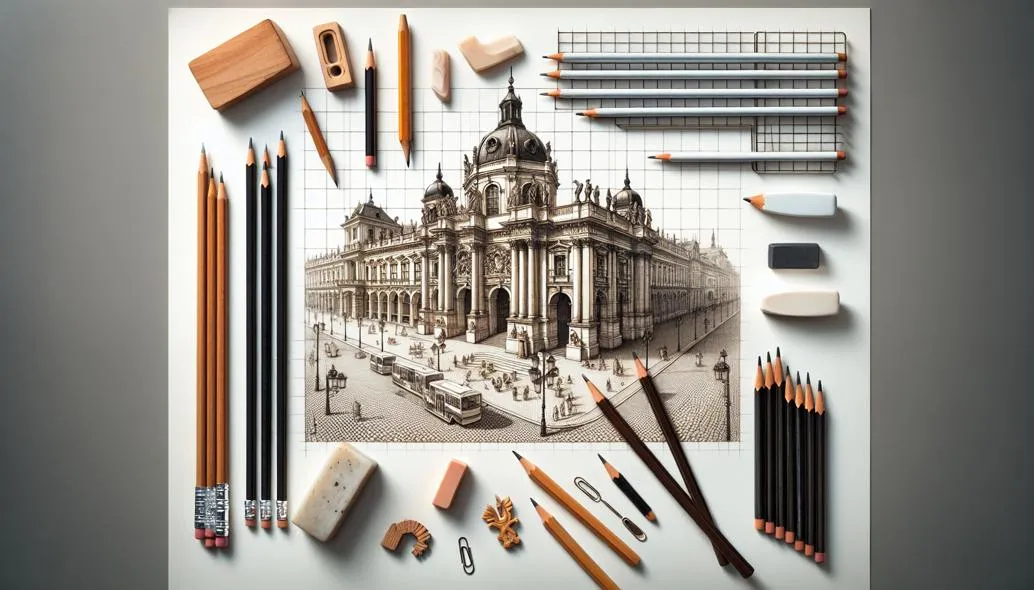
Sketching efficiency combines speed with accuracy through systematic approaches that maximize productivity while maintaining artistic quality standards. Grid techniques provide essential frameworks for workflow optimization, decision-making streamlining, and skill development acceleration that enable artists to produce more work in less time without compromising essential accuracy and artistic expression.
My early sketching sessions often stretched into frustrating hours where more time was spent erasing and re-drawing than creating satisfying artwork. Despite enthusiasm and reasonable observational abilities, the lack of systematic approach resulted in repeated proportion corrections, compositional adjustments, and detail refinements that consumed enormous amounts of time while producing mediocre results. Learning to integrate methodical grid techniques into my sketching practice transformed both speed and quality, revealing that efficiency comes from systematic preparation rather than rushing through construction.
Sketching efficiency extends beyond simple speed, encompassing workflow optimization, decision-making clarity, and systematic skill development that enables sustained productivity over extended periods. The most efficient sketching approaches balance speed with accuracy, ensuring that rapid production maintains quality standards while building rather than reinforcing problematic habits.
Understanding Sketching Efficiency Principles
If you want to sketch faster without losing proportions, start from a gridded reference (or add one with our grid maker online) so your quick passes stay correctly placed.
Time Management and Workflow Optimization
Preparation versus execution balance: Efficient sketching requires understanding the relationship between preparation time and execution efficiency. Systematic preparation often reduces total project time despite requiring initial setup investment. Grid systems exemplify this principle by providing accuracy frameworks that prevent time-consuming corrections during construction phases.
Decision-making streamlining:
- Reference analysis: Systematic approaches to extracting essential information quickly
- Composition planning: Efficient methods for determining optimal subject arrangement
- Proportion establishment: Rapid but accurate measurement and proportion verification
- Detail prioritization: Systematic identification of essential versus optional elements
- Quality standards: Clear criteria for determining completion levels appropriate for different purposes
Energy and attention management: Sustained sketching productivity requires managing both physical energy and mental attention systematically. Understanding how to structure work sessions, manage concentration periods, and maintain consistent quality throughout extended production supports long-term artistic development and professional sustainability.
Systematic Approaches to Speed Development
Skill building versus production balance: Efficient sketching develops through systematic skill building that enhances both speed and quality simultaneously. Understanding how to structure practice sessions that build fundamental abilities while producing finished work creates sustainable improvement patterns.
Technology integration for enhanced productivity: Contemporary sketching benefits from appropriate technology integration that supports rather than replaces fundamental drawing skills. Digital tools, measurement applications, and reference management systems can enhance traditional sketching when integrated thoughtfully.
Professional workflow development:
- Project planning: Systematic approaches to organizing multiple sketching projects
- Reference management: Efficient systems for organizing and accessing source materials
- Tool organization: Streamlined material preparation and workspace management
- Quality documentation: Recording successful methods for consistent application
- Progress tracking: Monitoring skill development and productivity improvement over time
Professional Grid Systems for Enhanced Sketching Speed
Rapid Grid Construction Methods
Streamlined grid establishment: Efficient grid construction minimizes setup time while maximizing accuracy benefits. Understanding how to create effective grids quickly enables their integration into regular sketching practice without overwhelming time investment. Simplified grid methods can provide substantial accuracy benefits with minimal construction overhead.
Adaptive grid density for different sketching purposes: Different sketching applications require different levels of accuracy and detail, enabling adaptive grid approaches that match construction effort to intended purpose. Quick observational sketches benefit from simplified grids, while detailed studies require more sophisticated measurement systems.
Template and reusable grid systems:
- Standard proportion templates: Pre-constructed grids for common subject types and formats
- Modular grid approaches: Reusable systems adaptable to different subject requirements
- Digital grid templates: Technology-assisted systems for rapid grid establishment
- Physical grid tools: Specialized equipment enabling quick traditional grid construction
- Hybrid approaches: Combining digital planning with traditional execution for optimal efficiency
Time-Saving Grid Applications
Strategic grid placement for maximum benefit: Efficient grid use focuses measurement precision where accuracy is most critical while allowing simplified treatment in less critical areas. Understanding where to concentrate grid accuracy and where to work more freely optimizes time investment for maximum artistic return.
Progressive grid refinement: Advanced grid techniques enable starting with simplified systems and refining accuracy progressively as sketches develop. This approach provides early structure for rapid progress while enabling increased precision when and where needed.
Specialized grid approaches for different subjects:
- Portrait efficiency: Grid systems optimized for facial proportion and feature placement
- Figure sketching: Rapid proportion checking for gesture and figure studies
- Landscape construction: Efficient spatial relationship management for environmental subjects
- Still life organization: Systematic approaches to object arrangement and proportion coordination
- Architectural sketching: Streamlined perspective and structural proportion verification
Advanced Efficiency Techniques with Grid Integration
Workflow Optimization Strategies
Pre-planning and reference analysis: Systematic reference analysis before beginning construction enables efficient decision-making throughout the sketching process. Understanding how to identify essential information quickly and plan construction sequences prevents time-consuming mid-process adjustments and corrections.
Staged construction approaches: Professional sketching often employs systematic construction stages that build complexity efficiently while maintaining accuracy throughout the process. Grid techniques support staged approaches by providing consistent reference frameworks across different development phases.
Quality control integration:
- Rapid accuracy verification: Quick methods for checking proportional relationships during construction
- Progress assessment: Systematic evaluation of sketch development and completion levels
- Correction strategies: Efficient approaches to addressing errors without compromising overall progress
- Decision criteria: Clear standards for determining when sketches meet intended purposes
- Documentation practices: Recording successful approaches for consistent application
Specialized Efficiency Applications
Commercial sketching and professional applications: Professional sketching often requires producing multiple works within time constraints while maintaining consistent quality standards. Grid techniques help establish systematic approaches that enable sustained productivity without quality degradation.
Educational and instructional efficiency: Teaching sketching requires producing demonstration work efficiently while maintaining clear communication with students. Understanding how to use grid techniques for rapid demonstration while explaining construction principles supports effective instruction.
Digital-traditional hybrid workflows:
- Digital planning: Computer-based composition and proportion analysis for traditional execution
- Reference enhancement: Digital processing of source materials for improved sketching efficiency
- Documentation integration: Recording traditional sketching processes for analysis and improvement
- Portfolio presentation: Professional digital presentation of traditional sketching work
- Client communication: Efficient sharing of work progress and technical approaches
Skill Development Through Efficient Practice
Systematic Skill Building
Practice session optimization for accelerated learning: Efficient skill development requires systematic practice approaches that maximize learning within available time. Grid techniques provide measurement frameworks that enable objective assessment of progress while supporting skill development across multiple areas simultaneously.
Progressive challenge management: Artistic development benefits from systematic progression through increasing challenges that build capabilities without overwhelming current skill levels. Understanding how to structure progression enables sustained improvement without discouragement or skill plateaus.
Weakness identification and targeted improvement:
- Proportion accuracy: Systematic approaches to improving measurement and relationship accuracy
- Construction speed: Methods for increasing drawing speed without sacrificing essential quality
- Observational skills: Enhanced techniques for extracting visual information efficiently
- Decision-making: Improved approaches to artistic choices and problem-solving during construction
- Quality consistency: Maintaining standards across different working conditions and time pressures
Professional Development Applications
Portfolio development efficiency: Professional artistic development requires producing substantial bodies of work that demonstrate capabilities while supporting career advancement. Understanding how to produce portfolio-quality sketching efficiently enables career development without overwhelming time investment.
Client work and commercial applications: Professional sketching often involves working within client time constraints while meeting quality expectations. Grid techniques help establish systematic approaches that deliver consistent results within professional timelines.
Teaching and workshop applications:
- Demonstration efficiency: Producing clear instructional examples within teaching time constraints
- Student guidance: Helping others develop efficient sketching approaches appropriate for their skill levels
- Curriculum development: Creating systematic instruction sequences that build sketching efficiency
- Assessment methods: Objective evaluation approaches for measuring student progress and efficiency development
- Professional development: Continuing education for maintaining and improving teaching effectiveness
Problem-Solving Efficiency Challenges
Common Efficiency Obstacles
Perfectionism versus productivity balance: Many artists struggle with balancing quality standards against productivity requirements, often spending excessive time on refinements that don't meaningfully improve artistic communication. Understanding how to establish appropriate completion criteria for different purposes enables sustainable productivity.
Tool and technique overwhelm: The availability of numerous sketching tools and techniques can create decision paralysis that reduces efficiency. Systematic approaches to tool selection and technique integration help maintain focus on essential skills while avoiding counterproductive complexity.
Consistency across different working conditions:
- Time pressure adaptation: Maintaining quality standards when working within tight deadlines
- Environment variation: Consistent performance across different working spaces and conditions
- Energy level management: Adapting approaches based on physical and mental energy availability
- Material constraints: Working efficiently with limited or unfamiliar tools and materials
- Subject variation: Consistent approaches across different subject types and complexity levels
Advanced Problem-Solving Techniques
Efficiency bottleneck identification: Systematic analysis of personal working methods helps identify specific areas where time is wasted or quality compromised. Understanding individual efficiency patterns enables targeted improvement rather than general productivity advice.
Workflow customization for individual needs: Effective efficiency improvements require adaptation to individual working styles, physical capabilities, and artistic goals. Generic productivity advice often fails because it doesn't account for personal variation in optimal working methods.
Professional efficiency standards and expectations:
- Industry benchmarks: Understanding professional speed and quality expectations for different applications
- Client relationship management: Efficient communication and project management for professional practice
- Business skill integration: Combining artistic efficiency with essential business capabilities
- Professional development: Maintaining competitive capabilities in evolving markets
- Quality assurance: Systematic approaches to maintaining professional standards under various working conditions
Digital Integration and Contemporary Efficiency
Technology-Enhanced Sketching Efficiency
Digital tools for traditional sketching enhancement: Contemporary sketching benefits from digital tools that support rather than replace traditional drawing skills. Reference management applications, proportion analysis software, and digital documentation systems can enhance traditional sketching efficiency when integrated appropriately.
Hybrid workflow optimization: Many professional artists combine digital planning and analysis with traditional execution methods. Understanding how to integrate these approaches maximizes both efficiency and artistic quality while maintaining traditional drawing strengths.
Professional documentation and presentation:
- Process recording: Efficient methods for documenting sketching techniques and development
- Portfolio presentation: Professional digital presentation of traditional sketching work
- Client communication: Streamlined approaches to sharing work progress and receiving feedback
- Educational content: Creating instructional materials demonstrating efficient sketching techniques
- Professional networking: Using documentation for career development and professional relationships
Contemporary Professional Applications
Market demands and efficiency requirements: Contemporary professional sketching must meet increased speed and quality expectations due to competitive markets and client demands. Understanding current professional standards helps guide skill development and efficiency improvement.
Remote work and digital collaboration: Modern professional practice increasingly involves remote collaboration and digital communication. Efficient sketching must integrate with contemporary business practices while maintaining artistic quality and professional relationships.
Continuing education and skill maintenance:
- Professional development: Staying current with evolving techniques and market requirements
- Technology integration: Appropriate adoption of new tools and methods
- Industry networking: Building professional relationships that support career sustainability
- Quality standards: Maintaining competitive capabilities across different market sectors
- Efficiency assessment: Regular evaluation and improvement of personal working methods
Career Applications and Professional Development
Commercial Sketching Efficiency
Freelance and commission work optimization: Professional sketching practice requires balancing artistic quality with business sustainability. Understanding how to produce consistent work efficiently within client timeframes enables professional practice sustainability while maintaining artistic integrity.
Educational and workshop instruction: Teaching sketching requires demonstrating techniques efficiently while maintaining clear communication with students. Grid-based approaches provide systematic frameworks that can be explained clearly while producing convincing demonstration work.
Content creation and digital media applications:
- Educational content: Efficient production of instructional materials for various platforms
- Social media: Consistent content creation that builds professional presence
- Online instruction: Systematic approaches to digital art education
- Portfolio development: Efficient production of professional demonstration materials
- Client attraction: Creating work that effectively communicates professional capabilities
Long-term Career Development
Skill progression and professional growth: Sustainable artistic careers require continuous skill development that enhances both efficiency and quality over time. Understanding how to structure long-term development enables career advancement without overwhelming current capabilities.
Professional reputation and consistency: Professional success requires consistent quality across different projects and working conditions. Systematic approaches to efficiency help maintain professional standards while enabling increased productivity and business growth.
Industry adaptation and market responsiveness:
- Technology integration: Adapting to evolving tools and techniques
- Market demands: Meeting changing client expectations and industry standards
- Professional standards: Maintaining competitive capabilities across different sectors
- Business development: Integrating artistic efficiency with essential business skills
- Career sustainability: Long-term approaches to professional development and market positioning
Mastering Sketching Efficiency Excellence
How grids can help you sketch faster and more efficiently represents sophisticated integration of systematic methods, workflow optimization, and skill development that serves both artistic expression and professional application. Through consistent application of grid techniques combined with understanding of productivity principles, artists develop both technical proficiency and the organizational abilities necessary for sustained creative output.
My experience with systematic efficiency development has taught me that speed without accuracy is counterproductive, while accuracy without efficiency limits artistic potential. The most effective approaches balance these requirements through systematic methods that support rather than constrain creative expression while enabling sustained productivity over extended periods.
Professional sketching efficiency depends on understanding how systematic methods, appropriate technology use, and skill development work together to create sustainable artistic practice that meets both personal creative goals and professional requirements. Through dedicated study and systematic application of grid techniques, artists develop the sophisticated working methods and professional capabilities necessary for lifelong growth in efficient sketching and related professional applications.
Mastering Efficient Grid Sketching
Dive deeper into long-form efficiency with How Grids Help Beginners Draw More Accurately and keep large compositions on schedule using the grid for large artworks guide.
Ready to Try the Grid Method?
Put these techniques into practice with our free grid generator tool—trusted by 170,000+ artists worldwide.
Create Your Grid Now →